
Everything Stops for Tea
On tea, routine, and time standing still

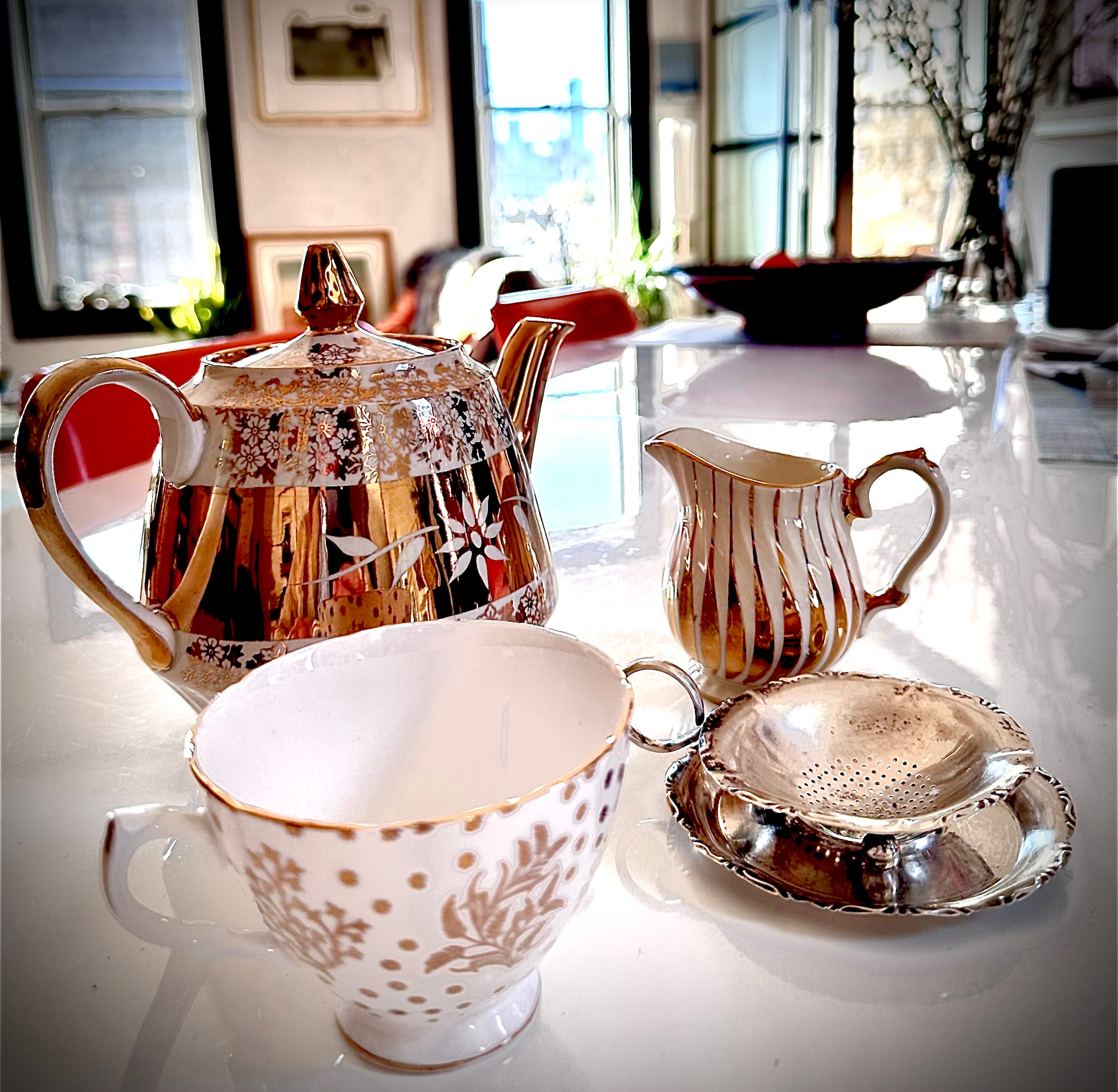
I am slightly eccentric when it comes to tea. Black tea. Nothing green or fruity. No abominable blends or floral travesties. Just black tea. I drink a lot of it – more than is probably reasonable. But not in a British I’d better stick the kettle on sort of way. I’m not especially interested in providing tea for other people, and it doesn’t heal my moods or see me through catastrophe. Red wine does that job.
Tea, for me, is routine. A kind of liquid meditation – though not in any cultural or spiritual sense. I’m not offering anything to the gods or contemplating enlightenment. Drinking tea is simply a necessary indulgence, performed at only two possible times of day.
Despite reading many books about tea, I can claim little expertise. No need for a history lesson here. Except to say that, like most good things British, tea production was robbed from elsewhere. It was once a closely guarded secret in China; the production kept out of sight from foreigners. But eventually a fellow Scot whipped a few plants and documented the process disguised as a mandarin. The Empire did the rest.
The grading of tea is complex. My favourites, Darjeeling and Assam, have classifications from Orange Pekoe – which has nothing to do with oranges – to Super Fine Tippy Golden Flowery Orange Pekoe. This nomenclature is supposed to describe the size of leaves and what happens to them after they are picked. But as with many things in life, I am still none the wiser.
I know what I like. Most mornings begin with Darjeeling. A hint of green still on the long, curled black leaf, which gives it a fresh, quenchable flavour. Just a pinch between the thumb and forefinger, no more. Enough to turn the boiling water to the palest hint of honey. Gnat’s pee, we used to call it. Always loose leaves. Teabags have no place except in emergency or when Builder’s Tea is required. But this does not fit the bill here. My mornings require a deluge of tea. Which means a teapot, capacious and extravagantly decorated.
Some days demand a maltier brew. Inspiration requires Ceylon tea. Stronger and more oomph. My current favourite is from the Kenilworth Estate, high in the Sri Lankan highlands. There are echoes in the name — the Earl of Leicester, Sir Walter Scott — that lend it a romantic quality. And once it’s in the cup, it is a baptism of heavenly tannins which leaves a slightly bitter mouthfeel.
Late afternoons provide another window during which tea is the right beverage. The fermented complexity of Lapsang Souchong or Keemun intoxicate my senses with their smoky aromas. In a perfect world this would always be accompanied by a slab of fruitcake. But the march of time against the inevitable impact of gravity does not allow me such luxuries, so I must make do with the liquid elixir itself. This is the settling of the day. A mark of time passed. Which does not always signify achievement. It just means tea now.
As a child, the first sound I heard every morning was the dry squeal of the stove lid being lifted, followed by the heavy cast-iron kettle crashing down onto its hot plate. Mummy was up. She drank strong tea with milk. Her own mixture of China and Indian leaf. An enormous cup was taken in the kitchen, gathering her thoughts. The second was brought upstairs while she made ready for the day. The first betrayal of age was a trembling hand, which set the bone china rattling against its own delicate strength.
Graham’s day always started later than his spouse’s — another habit I have inherited. He ate breakfast alone, and his tea was altogether different. Tightly rolled balls of Assam, brewed to boiling point in a metal teapot on the stove, then left to stew. Dark, black, and dry, to accompany vintage marmalade on oatcakes. No butter or milk to taint his ascetic palate. Just the thing to set him off on a day of serious rumination.
Exploring an old cottage on the farm, I came across a wind-up gramophone and a stash of records from the 1940s. Graham had always been faddish in a Toad-ish sort of way. Among the mothballed remnants of his life there had been alpinism, chemistry, Highland dancing, photography, accordion playing, hunting to hounds, painting — always in abundance. Always the best of everything. The record collection was extensive.
I hauled the gramophone back to the house. Unusually, Mummy was excited by my find. There was no reprimand for being where I shouldn’t have. Soon I had the old thing turning, and the music seemed to have a curious effect, like a draught of forgetfulness, spinning her back to her younger self.
When the sounds of his past reached him, Daddy left what he was doing and joined us. The kitchen table was pushed back. They began to dance — a big band number. I twirled on the sidelines, carried by these new sounds. Later Mummy taught me to waltz with my feet on hers. Step two three four, side two three four.
My favourite of all the records was Jack Buchanan, a
svelte and handsome Scotsman – a matinee idol who eased his way on to the silver screen speaking with as much mid-Atlantic Englishness as Noel Coward himself. The song was called Everything Stops for Tea. I soon knew it by heart.
To this day, as the afternoon wanes and I stand up from my desk, the tune pops into my head. And I still sing aloud.
Now I know just why Franz Schubert didn’t finish his Unfinished Symphony.
He might have written more but the clock struck four.
Everything stops for tea
.